Understanding RPM and Torque in Power Tools
Power tools are essential in construction, manufacturing, workshops, and industrial applications. Tools such as electric drills, angle grinders, marble cutters, and impact drivers rely on powerful motors to perform demanding tasks. Two of the most important factors that determine the performance of these tools are RPM and Torque.
Understanding RPM and torque helps users choose the right tool for the job and ensures efficient and safe operation. These two factors directly affect cutting speed, drilling capability, and overall tool performance.
 What is RPM in Power Tools?
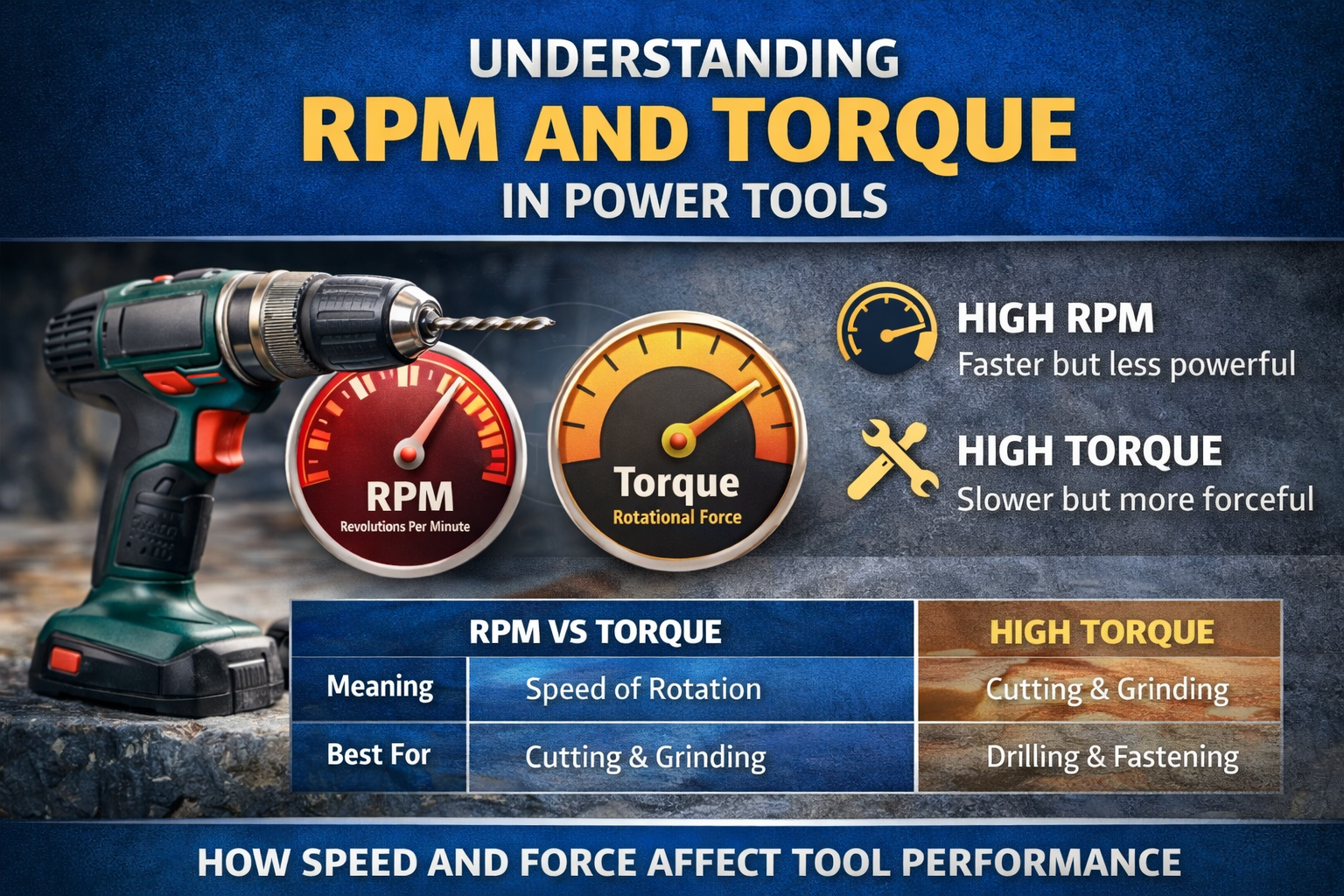
RPM stands for Revolutions Per Minute. It refers to the number of times the motor shaft or rotating part of the tool spins in one minute. In simple terms, RPM indicates how fast the tool rotates.
Higher RPM means the tool rotates faster, which is useful for tasks that require speed and smooth finishing.
For example:
- Angle grinders typically operate at very high RPM for smooth cutting and grinding.
- Electric drills with high RPM are ideal for drilling small holes quickly.
- Polishing tools use higher RPM to achieve smooth surface finishing.
However, higher RPM does not always mean more power. It simply means faster rotation.
What is Torque in Power Tools?
Torque refers to the rotational force produced by the motor of a power tool. It determines how much force the tool can apply when turning or cutting through a material.
Higher torque means the tool can handle tougher materials and more demanding tasks.
For example:
- Impact drills require high torque to drill into concrete or brick.
- Screwdrivers and impact drivers use torque to tighten or loosen screws and bolts.
- Low-speed tools often generate higher torque for heavy-duty operations.
Torque is particularly important when working with dense materials such as metal, hardwood, or stone.
Difference Between RPM and Torque
Although RPM and torque are related, they perform different functions in power tools.
| Feature | RPM | Torque |
| Meaning | Speed of rotation | Rotational force |
| Function | Determines how fast the tool spins | Determines how powerful the tool is |
| Best For | Cutting, grinding, polishing | Drilling, fastening, heavy work |
In many tools, there is a balance between RPM and torque. When torque increases, RPM may decrease, and vice versa.
Why RPM and Torque Balance Matters
A good power tool is designed with the right balance between RPM and torque. This balance ensures efficient performance without damaging the motor or the material.
For example:
- Cutting tools require high RPM for smooth cuts.
- Drilling tools require higher torque to penetrate hard materials.
- Polishing tools require steady RPM for consistent finishing.
If a tool has high RPM but low torque, it may struggle when working on tough surfaces. Similarly, high torque with low RPM may slow down work that requires speed.
RPM and Torque in Different Power Tools
Electric Drills
Electric drills typically offer adjustable RPM settings. Lower speeds provide higher torque for drilling hard materials, while higher speeds are used for lighter tasks.
Angle Grinders
Angle grinders operate at very high RPM to cut and grind materials efficiently. They rely more on speed than torque.
Impact Drivers
Impact drivers produce very high torque, which helps in tightening or loosening bolts and screws with ease.
Marble Cutters
Marble cutting tools require both high RPM and sufficient torque to cut through stone smoothly without damaging the blade.
Choosing the Right Tool Based on RPM and Torque
When selecting a power tool, it is important to consider the type of work you will perform. For precision tasks like polishing or light drilling, a tool with higher RPM may be suitable. For heavy-duty tasks such as drilling into concrete or cutting thick materials, higher torque is more important.
Professional users often choose tools that offer adjustable speed settings so they can control RPM and torque depending on the application.
Importance for Tool Performance and Durability
Understanding RPM and torque also helps prevent tool damage. Using a tool beyond its torque capacity can cause motor strain and overheating. Similarly, operating a tool at extremely high speeds without proper control can reduce accuracy and increase wear.
Using tools according to their designed RPM and torque specifications ensures better performance, safety, and longer tool life.