
How to Extend the Life of Your Industrial Power Tools
Industrial power tools are essential for construction sites, manufacturing units, workshops, and maintenance operations. Tools such as electric drills, angle grinders, marble cutters, and other heavy-duty equipment help improve productivity and efficiency. However, frequent usage, improper handling, and lack of maintenance can reduce the lifespan of these tools.
By following proper care and maintenance practices, businesses and professionals can significantly extend the life of their industrial power tools while maintaining optimal performance.
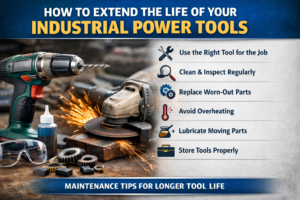
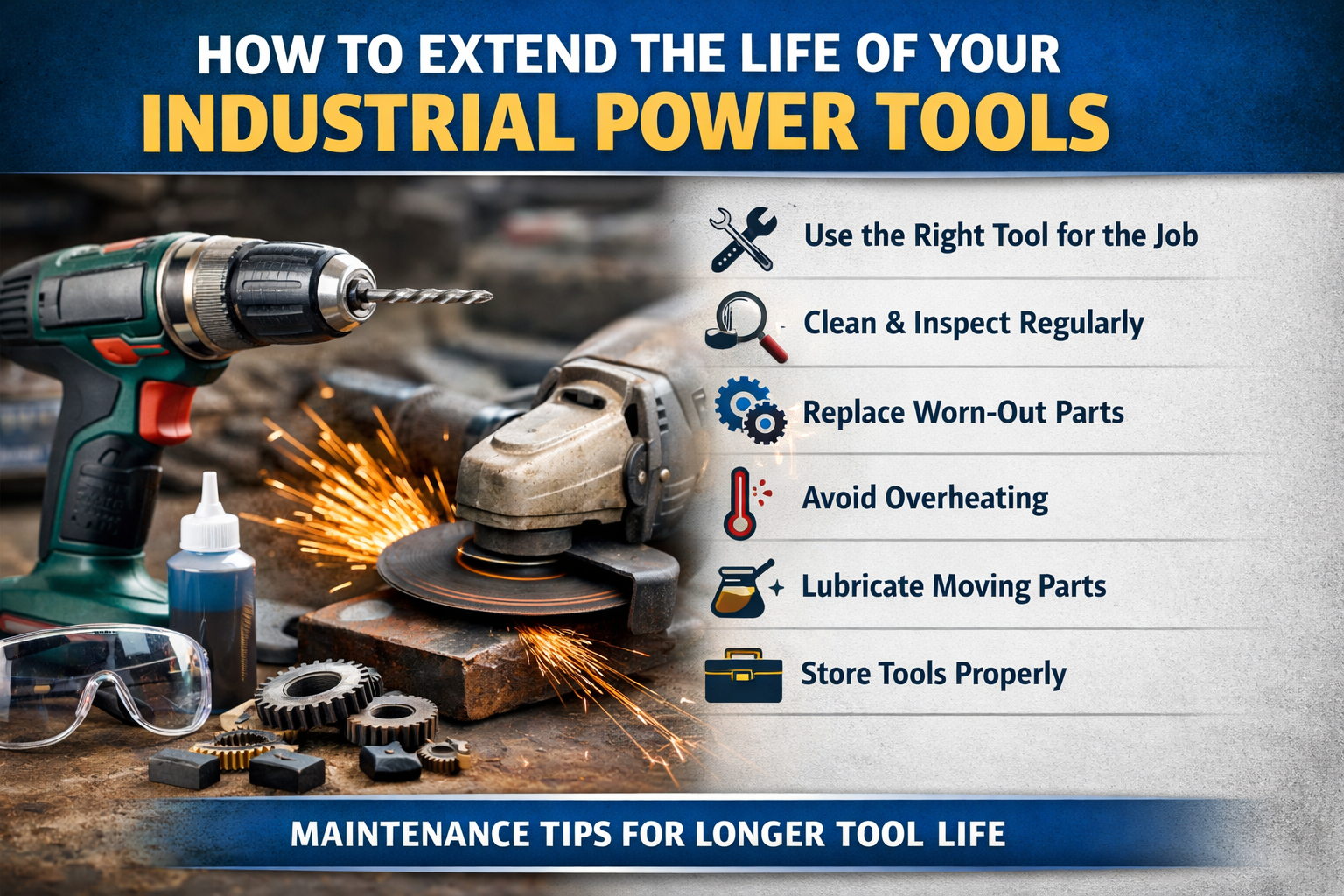
Use the Right Tool for the Right Job
One of the most common reasons for power tool damage is using the wrong tool for a specific task. Every power tool is designed for a particular purpose, and using it outside its intended application can cause excessive strain on the motor and internal components.
For example, using a drill for heavy grinding or forcing a grinder to cut thick materials beyond its capacity can lead to overheating and motor damage. Always select the correct tool and attachments for the job to ensure safe and efficient operation.
Perform Regular Cleaning
Dust, debris, and metal particles can accumulate inside power tools over time. These particles may clog ventilation slots, affect moving parts, and cause overheating of the motor.
Regular cleaning helps maintain airflow and prevents internal damage. After each use, wipe the exterior of the tool and blow out dust from vents using compressed air. Keeping tools clean ensures smooth operation and improves their longevity.
Inspect Power Cords and Connections
Damaged power cords and loose connections can lead to electrical issues and even safety hazards. Regularly inspect the power cord for cuts, cracks, or exposed wires. If any damage is found, repair or replace the cord immediately.
Secure electrical connections ensure stable power supply and protect the motor from voltage fluctuations or short circuits.
Replace Worn-Out Spare Parts
Industrial power tools contain several components that naturally wear out with continuous use. Parts such as carbon brushes, armatures, gears, and bearings require periodic inspection and replacement.
Replacing worn components before they completely fail prevents further damage to the tool. Using high-quality spare parts also helps maintain the efficiency and durability of the equipment.
Avoid Overheating
Overheating is one of the biggest enemies of electric power tools. Continuous operation without breaks can cause the motor and internal components to heat up excessively.
Allow the tool to rest periodically during long working hours. Proper cooling prevents insulation damage in the motor winding and extends the overall life of the tool.
Lubricate Moving Parts
Many industrial tools contain moving parts such as gears and bearings that require proper lubrication. Lack of lubrication increases friction, leading to faster wear and tear.
Applying recommended lubricants at regular intervals keeps the internal mechanisms running smoothly and prevents unnecessary damage to the gear system.
Store Tools Properly
Proper storage plays a crucial role in maintaining the condition of power tools. Tools should be stored in a clean, dry place away from moisture, dust, and extreme temperatures.
Using protective toolboxes or storage racks helps prevent accidental damage and protects the equipment from environmental factors that may cause corrosion or electrical issues.
Train Workers on Proper Usage
Improper handling by operators can significantly reduce the lifespan of power tools. Workers should be trained on correct operating techniques, safety procedures, and maintenance practices.
When tools are used responsibly and according to manufacturer guidelines, they perform more efficiently and last longer.
Conduct Routine Maintenance Checks
Regular maintenance inspections help identify potential problems before they become serious issues. Checking motor performance, unusual noises, vibration levels, and component wear can help detect faults early.
Scheduled maintenance not only extends the life of power tools but also improves workplace safety and operational efficiency.