
Industrial Air Blower Applications Across Different Industries
Introduction
Industrial air blowers are among the most versatile and essential machines used across modern industries. From manufacturing plants and construction sites to food processing facilities and pharmaceutical laboratories, air blowers play a critical role in cleaning, cooling, drying, ventilating, material handling, and dust removal. Their ability to deliver a controlled flow of air makes them indispensable for improving operational efficiency, workplace safety, and product quality.
With rapid industrialization and increasing automation, the demand for high-performance industrial air blowers continues to grow. Modern blowers are designed with advanced motors, energy-efficient technology, reduced noise levels, and enhanced durability, making them suitable for continuous operation in demanding environments.
This comprehensive guide explores the various applications of industrial air blowers across different industries, their benefits, types, key features, and important factors to consider when selecting the right air blower for your business.
What Is an Industrial Air Blower?
An industrial air blower is a mechanical device that generates a high-volume stream of air at controlled pressure. Unlike household blowers, industrial models are engineered for continuous operation and heavy-duty applications. They are widely used for cleaning equipment, removing dust, cooling machinery, drying surfaces, ventilating workspaces, and transporting lightweight materials.
Industrial air blowers are available in various sizes, capacities, and configurations to meet the unique needs of different industries.
Why Industrial Air Blowers Are Important
Industrial facilities rely on air blowers because they improve productivity while reducing manual labor. They help maintain cleaner workplaces, protect machinery from dust buildup, enhance production efficiency, and contribute to safer working environments.
Some major advantages include:
- Fast and effective cleaning
- Improved ventilation
- Reduced downtime
- Better machine cooling
- Efficient drying processes
- Lower maintenance costs
- Increased worker safety
- Enhanced product quality
- Energy-efficient operation
- Long service life
Types of Industrial Air Blowers
Choosing the right blower depends on the required airflow, pressure, and application.
1. Centrifugal Air Blowers
Centrifugal blowers use rotating impellers to generate high-pressure airflow. They are commonly used in ventilation systems, dust collection, furnaces, and industrial cooling.
Applications
- HVAC systems
- Industrial exhaust
- Dust collection
- Material handling
- Boiler combustion
2. Axial Flow Blowers
Axial blowers move large volumes of air parallel to the fan shaft. They are ideal for applications requiring high airflow with relatively low pressure.
Applications
- Factory ventilation
- Warehouse cooling
- Tunnel ventilation
- Cooling towers
- Agriculture
3. High-Speed Air Blowers
These blowers generate concentrated airflow suitable for precision cleaning and drying operations.
Applications
- Electronics manufacturing
- Automotive detailing
- Machinery cleaning
- Production lines
4. Portable Industrial Air Blowers
Portable models offer flexibility and convenience for maintenance teams and field operations.
Applications
- Construction sites
- Equipment maintenance
- Workshops
- Service centers
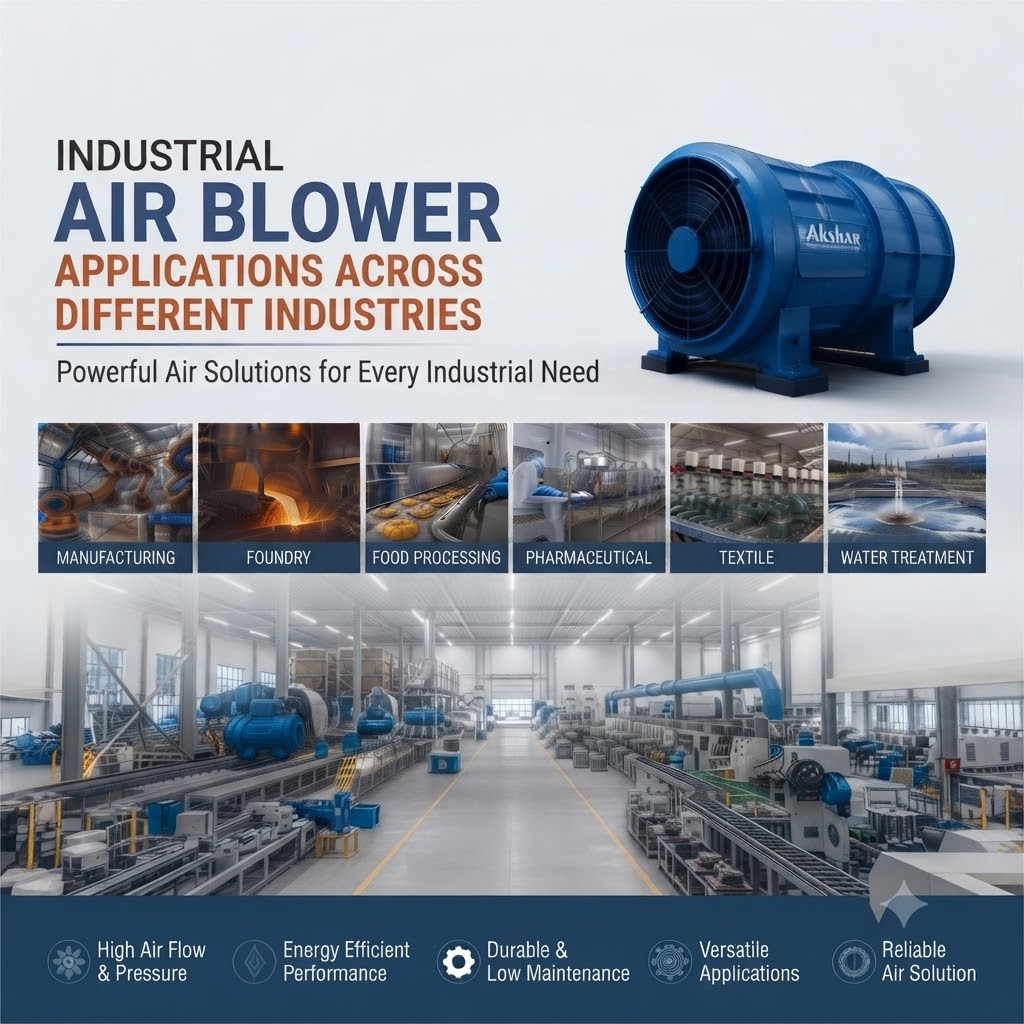
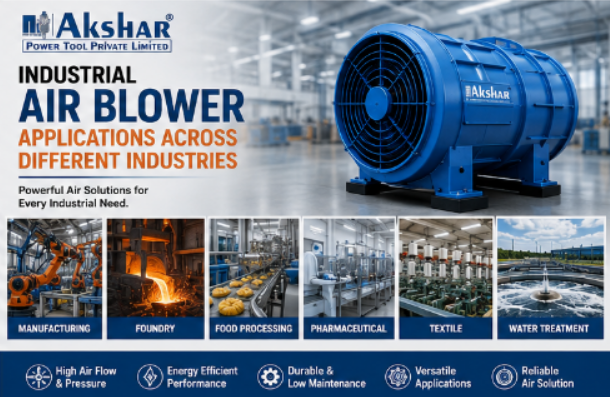
Industrial Air Blower Applications Across Different Industries
1. Manufacturing Industry
Manufacturing facilities rely heavily on industrial air blowers for daily production operations.
Common Uses
- Cleaning production lines
- Removing metal chips
- Drying machined components
- Cooling industrial equipment
- Dust removal
- Conveyor cleaning
- Packaging operations
Clean equipment operates more efficiently and experiences fewer breakdowns.
2. Automotive Industry
Vehicle manufacturing plants and service workshops use air blowers in numerous processes.
Applications
- Surface cleaning before painting
- Drying painted components
- Engine compartment cleaning
- Dust removal
- Cooling welding stations
- Interior cleaning
Proper cleaning ensures better paint adhesion and improved product quality.
3. Construction Industry
Construction environments generate large amounts of dust and debris.
Industrial air blowers help maintain clean and safe workspaces.
Applications
- Site cleaning
- Dust removal
- Concrete surface cleaning
- Equipment maintenance
- Drying floors
- Ventilating enclosed areas
Portable blowers are particularly useful for construction professionals.
4. Metal Fabrication Industry
Metalworking operations require constant cleaning to maintain production quality.
Applications
- Removing metal shavings
- Cleaning cutting machines
- Laser cutting maintenance
- Plasma cutting cleanup
- Welding station cleaning
- Cooling fabrication equipment
Keeping workstations clean improves precision and equipment life.
5. Woodworking Industry
Wood dust presents both safety and quality challenges.
Industrial air blowers assist with:
- Sawdust removal
- Machine cleaning
- Drying wood surfaces
- Workshop ventilation
- Dust extraction support
- Furniture finishing preparation
Cleaner workshops reduce fire risks and improve product quality.
6. Food Processing Industry
Food manufacturers require hygienic environments that meet strict quality standards.
Industrial air blowers are used for:
- Drying food containers
- Cleaning production equipment
- Packaging line cleaning
- Conveyor drying
- Cooling baked products
- Removing moisture
Food-grade blowers help maintain sanitary conditions while supporting efficient production.
7. Pharmaceutical Industry
Precision and cleanliness are essential in pharmaceutical manufacturing.
Applications
- Cleanroom ventilation
- Equipment cleaning
- Tablet drying
- Packaging preparation
- Air circulation
- Dust control
Reliable airflow helps maintain contamination-free production environments.
8. Electronics Manufacturing
Electronic components require dust-free production conditions.
Air blowers are commonly used for:
- PCB cleaning
- Component drying
- Assembly line cleaning
- Static dust removal
- Cooling testing equipment
Even microscopic dust particles can affect electronic performance.
9. Textile Industry
Textile manufacturing produces fibers and lint that can accumulate on machinery.
Industrial air blowers help by:
- Cleaning spinning machines
- Removing lint
- Drying fabrics
- Cooling machinery
- Improving air circulation
Cleaner equipment results in fewer production interruptions.
10. Printing Industry
Printing quality depends on clean equipment and dry surfaces.
Applications include:
- Drying printed materials
- Cleaning printing presses
- Paper dust removal
- Cooling production equipment
- Packaging preparation
Fast drying improves productivity and print quality.
11. Agriculture
Modern agricultural operations use industrial blowers for numerous applications.
Uses
- Grain drying
- Seed cleaning
- Warehouse ventilation
- Livestock cooling
- Greenhouse ventilation
- Crop storage
Proper airflow helps preserve agricultural products and improve storage conditions.
12. Warehouses and Logistics
Large warehouses require effective ventilation and cleaning.
Industrial blowers support:
- Dust removal
- Equipment cooling
- Loading dock ventilation
- Storage area ventilation
- Cleaning packaging stations
Good airflow improves worker comfort and inventory protection.
13. HVAC and Facility Management
HVAC professionals frequently use industrial air blowers during installation and maintenance.
Applications include:
- Air duct cleaning
- Ventilation testing
- Cooling equipment
- Exhaust systems
- Building maintenance
Reliable airflow ensures better indoor air quality and system performance.
Key Features of Modern Industrial Air Blowers
Today’s industrial air blowers include advanced features such as:
- High-performance motors
- Energy-efficient operation
- Variable speed control
- Ergonomic design
- Low vibration
- Reduced noise levels
- Durable housing
- Thermal overload protection
- Continuous-duty capability
- Lightweight construction
- Compact design
- Easy maintenance
These features improve reliability while lowering operating costs.
Benefits of Using Industrial Air Blowers
Industrial businesses choose high-quality air blowers because they offer numerous advantages:
Improved Productivity
Quick cleaning and drying reduce production delays.
Enhanced Worker Safety
Removing dust and debris creates a safer work environment.
Better Equipment Performance
Clean machinery operates more efficiently and experiences less wear.
Reduced Maintenance Costs
Regular cleaning prevents premature equipment failure.
Energy Savings
Modern motors consume less electricity while delivering powerful airflow.
Increased Product Quality
Clean production environments reduce contamination and defects.
Long Service Life
Heavy-duty construction ensures reliable performance for years.
How to Choose the Right Industrial Air Blower
Before purchasing an industrial air blower, consider the following factors:
- Airflow (CFM)
- Air pressure requirements
- Motor power
- Energy efficiency
- Noise level
- Continuous-duty capability
- Portability
- Build quality
- Maintenance requirements
- Application type
- Safety features
- Availability of spare parts
- Warranty and after-sales support
Selecting the correct blower ensures better performance and long-term value.
Maintenance Tips
Proper maintenance extends the life of industrial air blowers.
Follow these best practices:
- Clean air inlets regularly.
- Inspect electrical connections.
- Check bearings and moving parts.
- Replace worn brushes or filters when applicable.
- Keep ventilation openings clear.
- Lubricate components according to the manufacturer’s guidelines.
- Store portable blowers in a clean, dry environment.
- Schedule routine inspections for continuous-duty units.
Preventive maintenance reduces downtime and repair costs.
Future Trends in Industrial Air Blowers
The industrial air blower market continues to evolve with new technologies, including:
- Brushless motor technology
- Smart IoT-enabled monitoring
- Predictive maintenance systems
- Variable-frequency drives (VFDs)
- Energy-efficient motor designs
- Lightweight composite materials
- Low-noise operation
- Sustainable manufacturing practices
These innovations will deliver higher efficiency, lower energy consumption, and improved reliability.