

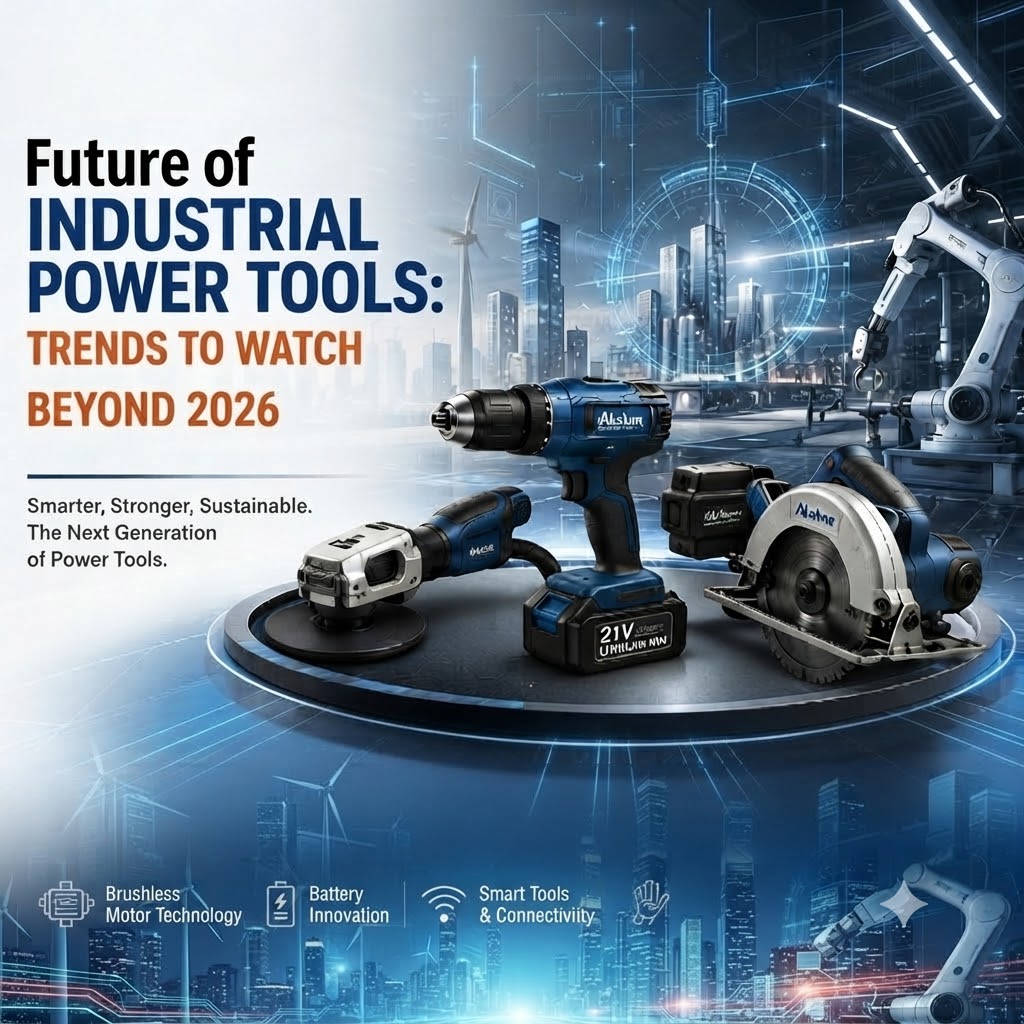
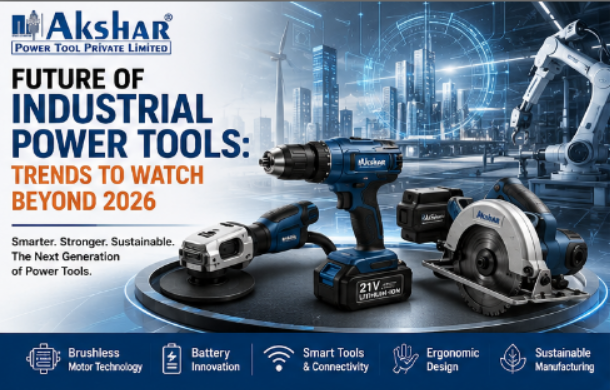
Future of Industrial Power Tools: Trends to Watch Beyond 2026
Introduction
The industrial power tool industry is entering one of the most transformative periods in its history. Over the last decade, manufacturers have focused on increasing power, durability, and efficiency. However, beyond 2026, the industry is shifting toward intelligent, connected, energy-efficient, and sustainable power tools that improve productivity while reducing operational costs.
From AI-powered diagnostics and Industry 4.0 integration to brushless motor technology and battery innovations, the next generation of industrial power tools will redefine manufacturing, construction, metal fabrication, woodworking, automotive production, and infrastructure projects.
Businesses that embrace these technologies early will benefit from improved productivity, enhanced worker safety, lower maintenance costs, and increased profitability.
In this article, we explore the biggest industrial power tool trends expected to shape the future beyond 2026.
Why Industrial Power Tools Are Evolving
Modern industries demand faster production, better precision, and improved workplace safety. Traditional power tools are no longer sufficient for highly automated production environments.
Industries now require equipment that offers:
- Higher operational efficiency
- Real-time monitoring
- Predictive maintenance
- Reduced energy consumption
- Better ergonomics
- Increased safety
- Lower downtime
- Smart connectivity
These changing requirements are driving manufacturers toward the next generation of intelligent industrial tools.
1. AI-Powered Smart Power Tools
Artificial Intelligence (AI) is becoming one of the biggest innovations in industrial manufacturing.
Future industrial power tools will include intelligent sensors capable of monitoring:
- Temperature
- Motor health
- Battery condition
- Torque output
- Usage patterns
- Tool vibration
- Performance history
Instead of waiting for a tool to fail, AI systems will predict maintenance requirements before breakdowns occur.
Benefits
- Reduced machine downtime
- Longer equipment life
- Lower maintenance costs
- Improved productivity
- Better job site efficiency
Smart analytics will allow managers to monitor hundreds of tools remotely through cloud-based dashboards.
2. Internet of Things (IoT) Connected Tools
Industrial facilities are rapidly adopting connected manufacturing systems.
Power tools beyond 2026 will communicate with:
- Factory management software
- Production monitoring systems
- Warehouse inventory
- Maintenance departments
- Quality control systems
IoT-enabled tools will automatically upload:
- Operating hours
- Maintenance schedules
- Calibration reports
- User activity
- Battery status
- Service alerts
Managers will receive notifications before equipment problems affect production.
3. Brushless Motor Technology Will Dominate
Brushless motors have already become popular, but beyond 2026 they will become the industry standard.
Unlike conventional brushed motors, brushless motors provide:
- Higher efficiency
- Less friction
- Lower heat generation
- Longer lifespan
- Reduced maintenance
- Better speed control
Industrial users benefit from continuous operation with minimal servicing.
Manufacturers are investing heavily in advanced electronic motor controllers that maximize efficiency while reducing power consumption.
4. High-Efficiency Battery Technology
Cordless industrial power tools are replacing corded equipment across many industries.
Future battery developments include:
Solid-State Batteries
These batteries offer:
- Higher energy density
- Faster charging
- Longer lifespan
- Better safety
- Reduced overheating
Ultra-Fast Charging
Charging times are expected to reduce dramatically, allowing batteries to recharge within minutes rather than hours.
Smart Battery Management
Future battery systems will monitor:
- Cell temperature
- Charging cycles
- Remaining life
- Power optimization
- Health diagnostics
This will significantly increase battery reliability.
5. Sustainable Manufacturing
Environmental regulations are becoming stricter every year.
Manufacturers are reducing carbon footprints by using:
- Recycled aluminum
- Eco-friendly plastics
- Sustainable packaging
- Energy-efficient production methods
- Renewable manufacturing energy
Industrial buyers increasingly prefer suppliers committed to environmental responsibility.
Sustainability will become a competitive advantage rather than simply a regulatory requirement.
6. Industry 4.0 Integration
Factories are becoming fully connected through Industry 4.0 technologies.
Power tools will become part of intelligent manufacturing ecosystems.
Future tools will integrate with:
- CNC machines
- Robotic systems
- Automated assembly lines
- ERP software
- MES platforms
- Digital twins
This integration enables real-time monitoring of every production stage.
Manufacturers gain complete visibility into equipment performance.
7. Advanced Safety Technologies
Worker safety continues to be one of the highest priorities across industries.
Future industrial power tools will include:
- Automatic kickback prevention
- Emergency shutdown sensors
- Motion detection
- Electronic braking systems
- Finger detection technology
- Anti-vibration systems
- Intelligent overload protection
These innovations reduce workplace accidents while improving operator confidence.
8. Predictive Maintenance
Traditional maintenance relies on scheduled servicing or equipment failure.
Predictive maintenance changes everything.
Sensors continuously monitor:
- Bearing condition
- Motor vibration
- Heat generation
- Current consumption
- Load conditions
Software predicts failures weeks before they occur.
Benefits include:
- Reduced downtime
- Lower repair costs
- Longer equipment life
- Better production planning
Predictive maintenance is becoming a major investment area for industrial manufacturers.
9. Lightweight Ergonomic Designs
Industrial workers often operate power tools for several hours every day.
Manufacturers are redesigning tools using:
- Magnesium alloy bodies
- Carbon fiber components
- Lightweight aluminum
- Compact brushless motors
- Improved balance
Better ergonomics reduce operator fatigue while increasing productivity.
Comfort is becoming just as important as power.
10. Precision Digital Torque Control
Modern industries require repeatable precision.
Future industrial drills, screwdrivers, and fastening systems will include digital torque control that automatically adjusts output according to material requirements.
Applications include:
- Automotive manufacturing
- Aerospace
- Electronics assembly
- Medical equipment production
- Heavy engineering
Digital precision significantly improves product quality.
11. Robotics and Collaborative Automation
Collaborative robots (Cobots) are rapidly entering industrial environments.
Future power tools will integrate directly with robotic systems.
Benefits include:
- Continuous operation
- Higher production speed
- Better consistency
- Reduced human error
- Improved workplace safety
Human workers and robots will increasingly work together rather than separately.
12. Cloud-Based Fleet Management
Large organizations often manage hundreds or thousands of power tools.
Cloud software allows companies to monitor:
- Tool location
- User assignment
- Maintenance history
- Battery inventory
- Warranty status
- Utilization reports
Fleet management reduces equipment loss while improving operational efficiency.
13. Improved Dust Extraction Systems
Dust exposure affects both worker health and equipment performance.
Future industrial power tools will feature:
- Integrated dust collection
- HEPA filtration
- Smart airflow monitoring
- Automatic filter cleaning
- Wireless vacuum synchronization
Cleaner workplaces improve safety while extending tool life.
14. Digital Service Records
Instead of paper service logs, every tool will maintain a digital maintenance history.
Records include:
- Purchase date
- Warranty
- Repairs
- Spare parts replaced
- Calibration
- Operating hours
Technicians can instantly access complete service information using mobile applications.
15. Increased Use of Advanced Materials
Manufacturers are developing stronger and lighter materials including:
- Aerospace-grade aluminum
- Carbon composites
- High-strength polymers
- Titanium components
- Ceramic coatings
These materials increase durability while reducing weight.
16. Energy-Efficient Industrial Equipment
Energy costs continue to rise worldwide.
Future industrial tools will focus on:
- Lower electricity consumption
- Improved motor efficiency
- Reduced standby power
- Intelligent power management
- Optimized battery usage
Energy-efficient equipment lowers operating expenses while supporting sustainability goals.
17. Digital Training and Augmented Reality
Training skilled operators is becoming easier with digital technologies.
Future systems may include:
- Augmented Reality (AR) repair instructions
- Interactive maintenance guides
- Virtual operator training
- Smart troubleshooting assistance
Technicians can diagnose problems more quickly with digital support tools.
18. Enhanced Cybersecurity for Connected Tools
As industrial tools become internet-connected, cybersecurity becomes essential.
Manufacturers will invest in:
- Secure cloud communication
- Encrypted firmware
- Multi-factor authentication
- Secure software updates
- Device authentication
Protecting production systems from cyber threats will become a key priority.
Industries That Will Benefit the Most
The future of industrial power tools will significantly impact:
- Automotive Manufacturing
- Aerospace Industry
- Heavy Engineering
- Metal Fabrication
- Construction
- Shipbuilding
- Oil & Gas
- Renewable Energy
- Railway Manufacturing
- Woodworking
- Furniture Manufacturing
- Electronics Assembly
Each industry will gain improved productivity, higher precision, and lower operational costs.
Challenges Ahead
Despite rapid innovation, manufacturers will face several challenges:
- High initial investment
- Workforce training requirements
- Cybersecurity risks
- Battery recycling
- Supply chain disruptions
- Semiconductor availability
- Integration with legacy systems
Companies that plan strategically will overcome these challenges and remain competitive.
What Businesses Should Do Today
Organizations preparing for the future should:
- Invest in brushless motor technology.
- Adopt connected smart tools.
- Train employees on digital systems.
- Implement predictive maintenance programs.
- Focus on sustainability initiatives.
- Upgrade battery-powered equipment.
- Improve cybersecurity practices.
- Choose reliable industrial tool suppliers.
Preparing today ensures long-term competitiveness.