
Why is My Air Blower Overheating? A Troubleshooting Checklist
An air blower is a workhorse, essential for everything from cooling electronics and clearing workshops to large-scale industrial processes. But like any hard-working machine, it can run into trouble. One of the most common—and potentially damaging—issues is overheating.
When your air blower starts to feel excessively hot to the touch, or even shuts down unexpectedly, it’s a clear signal that something is wrong. Ignoring it can lead to motor failure, fire hazards, and costly replacements.
Let’s walk through the most common culprits behind an overheating air blower and how you can diagnose and address them.
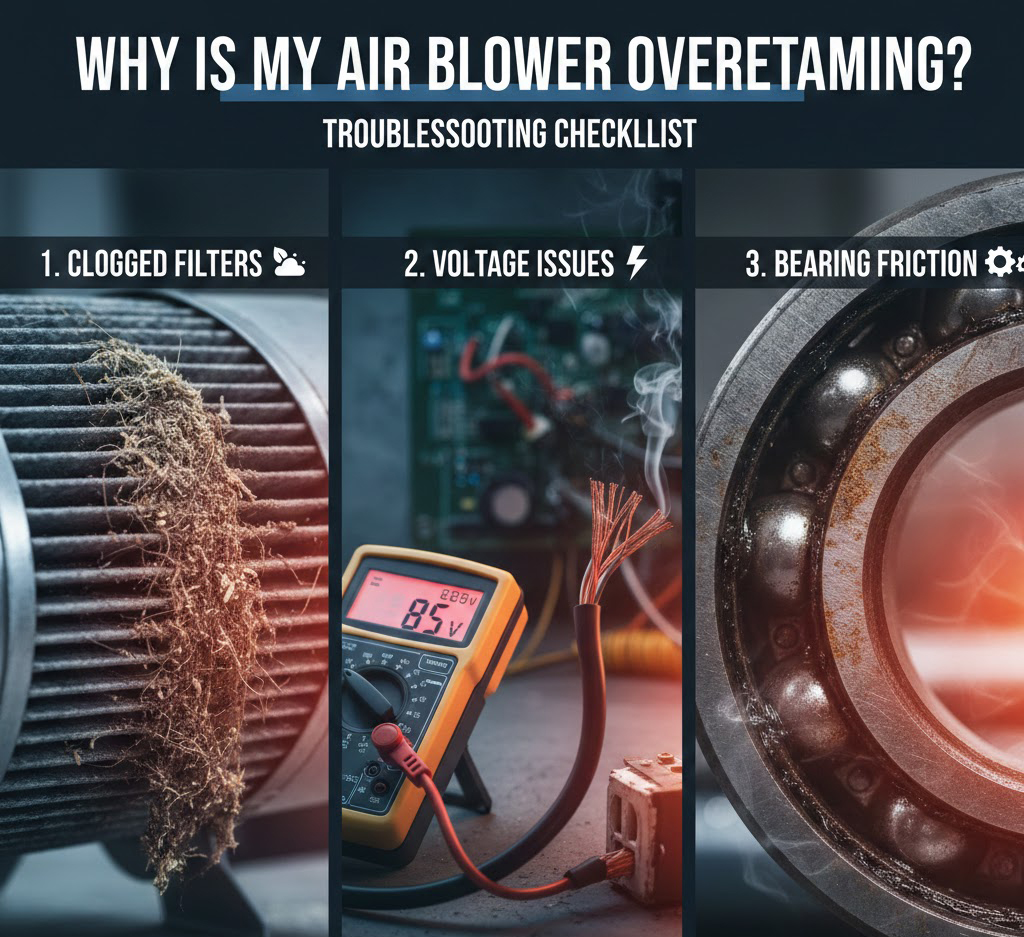
1. The Obvious Culprit: Clogged Filters and Blocked Intakes
This is perhaps the most frequent cause of overheating, yet often overlooked. Air blowers rely on a steady flow of air both for their operational purpose and for cooling their own motor.
The Problem: When filters become caked with dust, debris, or other particulate matter, the blower has to work much harder to pull in the necessary air. This increased effort stresses the motor, causing it to draw more current and generate excess heat. Similarly, if the air intake or exhaust vents are physically blocked (e.g., pushed against a wall, covered by rags, or filled with leaves), the same effect occurs.
Troubleshooting Steps:
- Inspect Filters: Power down the blower and visually check the air intake filters. Are they visibly dirty?
- Clean or Replace: If washable, clean them thoroughly. If disposable, replace them according to the manufacturer’s recommendations.
- Check Vents: Ensure all intake and exhaust vents are clear of obstructions. Give the blower ample space for airflow around its casing.
- The Electrical Gremlins: Voltage Issues
Electrical problems can be sneaky and dangerous. Incorrect voltage or faulty wiring can push a blower motor beyond its limits.
The Problem:
- Low Voltage (Under-voltage): If the blower is receiving less voltage than it’s designed for, the motor will try to compensate by drawing more current to maintain its power output. This increased current flow generates excessive heat.
- High Voltage (Over-voltage): While less common for overheating in the short term (it often leads to immediate damage), consistently high voltage can also stress components and shorten motor life, contributing to heat.
- Loose Connections/Faulty Wiring: Poor electrical connections create resistance, which in turn generates heat at the connection point and can also lead to inconsistent voltage delivery to the motor.
Troubleshooting Steps (Exercise Caution!):
- Check Power Supply: Use a multimeter to test the voltage at the outlet the blower is plugged into. Compare it to the blower’s specified voltage (usually found on a label or in the manual).
- Inspect Wiring: Visually check the power cord for any signs of damage, fraying, or loose connections. (If you suspect internal wiring issues, it’s best to consult a qualified electrician or technician.)
- Avoid Extension Cords (or use appropriately rated ones): Long or thin extension cords can cause voltage drop. Ensure any extension cord used is adequately rated for the blower’s current draw.
- The Mechanical Grind: Bearing Friction
Bearings are critical components that allow the motor’s shaft to spin smoothly. When they fail, things heat up fast.
The Problem: Over time, bearings can wear out, lose lubrication, or become contaminated. When this happens, they create increased friction as the motor spins. This friction directly translates into heat, which can quickly spread to the motor windings and other components, leading to overheating and eventual motor seizure.
Troubleshooting Steps:
- Listen for Unusual Noises: A common sign of failing bearings is a grinding, squealing, or whining sound coming from the motor when the blower is running.
- Check for Play: With the blower powered off, try to gently rock the fan blade or impeller. If there’s excessive wobble or play in the shaft, it could indicate worn bearings.
- Feel for Heat (Localized): After running the blower for a short period, carefully feel around the motor casing. If the heat is localized and intense near the motor’s shaft, it’s a strong indicator of bearing issues.
Other Potential Causes:
- Motor Overload: The blower might be trying to move more air or overcome more resistance than it’s designed for (e.g., trying to clear a heavily clogged duct with an underpowered unit).
- Environmental Temperature: If the ambient temperature where the blower operates is excessively high, it can struggle to dissipate its own heat effectively.
- Lack of Lubrication: Some older or larger industrial blowers require periodic lubrication of certain components. Refer to your manual.
- Internal Component Failure: In rare cases, internal motor windings or capacitors can fail, leading to increased resistance and heat. This usually requires professional repair.